The wonderful period that every woman eagerly anticipates is undoubtedly pregnancy. The emotional state and inner feelings experienced during this period can rarely be felt throughout a lifetime. Therefore, it is important to make these moments truly memorable and unforgettable. A pregnancy calendar will help you experience such feelings throughout the pregnancy period.
A pregnancy calendar gives you the opportunity to read about and embrace the amazing changes taking place in your body throughout the entire course of pregnancy.
Use the due date calculator to calculate your due date and gestational age.
Below, we provide a brief overview of the key changes that will occur in your body and in your baby throughout pregnancy.
You can find all the essential information you need during pregnancy through the "Lalu — Pregnancy School" mobile app.
By downloading the app, you will get free access to useful features and resources covering changes in mother and baby, proper nutrition, important medical checkups, gynecologist advice, pregnancy workouts, baby name ideas, gestational age tracking, chatting with other expectant mothers, and baby gender predictors.
If you are interested in the app, you can download it here: https://bit.ly/lalu-ilovasi
Pregnancy calendar: First trimester
Week 1
Your body is preparing for pregnancy. Based on obstetric dating, the first week of pregnancy begins from the day of the last menstrual period.
Week 2
In the 2nd week of pregnancy, ovulation occurs in the woman's body, and the body becomes ready for fertilization—that is, a mature egg cell is released from the ovary. Women most often get pregnant in the middle of their menstrual cycle, that is, on the 14th day.
If two mature eggs are released from the ovaries and both are fertilized, a dizygotic twin pregnancy occurs.
Pregnancy calendar: Week 3
A pregnancy test will still show a negative result. However, some women may notice fatigue, mild nausea, breast tenderness, bloody discharge (spotting), more frequent urination and other signs of pregnancy.
Week 4
The embryo is about the size of a poppy seed and grows rapidly. By the 10th week, all of the fetus's vital organs are formed, and some begin to function. During this period, the rapidly developing embryo is fragile. Negative external factors can cause fetal death or congenital anomalies.
Week 5
Due to changes in the nervous and endocrine systems of the pregnant woman, along with the synthesis of human chorionic gonadotropin (hCG) produced by the chorion (an outer embryonic membrane), most women experience morning sickness (toxicosis) in the first trimester. Symptoms of toxicosis include excessive salivation and vomiting.
Pregnancy Calendar: Week 6
Your embryo reaches a length of 0.51–0.64 cm. Its face gradually begins to take shape. Two dark spots appear, which will later develop into eyes, and two more spots will form the nostrils. In addition, the jaws, inner ears, tongue, vocal cords, neck, and chin begin to differentiate. A 6-week-old embryo has a large head, and its body resembles the letter "C."
Week 7
Pregnancy is a physiological process that can be difficult to adapt to. For this reason, even into the 7th week, a woman may still experience mood swings.
In the 7th week, blood flow to the pelvic cavity increases, resulting in more frequent urination and abdominal cramps.
Week 8
The unborn baby's body grows rapidly, and the fetus requires a large amount of energy and building materials. Because of this, the embryo's heart beats rapidly, contracting 150–170 times per minute. Neurons branch out in the brain, and new neural connections are formed.
Pregnancy calendar: Week 9
By the 9th week of the pregnancy calendar, fat tissue begins to accumulate in the woman's body—this is how the body prepares for breastfeeding.
In most women, the pelvic ligaments loosen under the influence of the hormone relaxin, which later makes the delivery process easier. Because of this, a woman may experience pelvic pain and changes in her gait.
Week 10
Your baby is over 3–4 cm long, and their body weight is around 4 g. In the coming weeks, the fetus will triple in size, and its forehead will bulge as the brain also grows. One of the most essential trace elements during pregnancy is zinc. Zinc is part of many enzymes that actively participate in biochemical processes in the body. More than 300 types of proteins are synthesized with the help of zinc.
Pregnancy Calendar: Week 11
The pregnant woman's general condition improves. The hormonal "storm" now subsides and no longer bothers her as much. The symptoms of toxicosis that previously caused discomfort no longer trouble the expectant mother.
Even so, pregnancy progresses differently for every woman; in some, all symptoms may "peak" by weeks 11–12.
Week 12
By the 12th week of pregnancy, one of the most crucial stages in fetal development occurs: reflexes begin to form. Its fingers and palms flex and extend, muscles start to contract, the muscles around the mouth and eyes also begin to move, and a sucking reflex develops. Now, the fetus can sense touch on the mother's belly and move in response. However, the mother cannot feel these movements yet.
Pregnancy Calendar: Week 13
By this week, you can find out the sex of your unborn baby using an ultrasound. Even so, it is still difficult to say with complete certainty. The baby becomes more active: they can now freely move their arms and legs, swallow, yawn, and hiccup.
Congratulations!
You have put the most delicate stage of pregnancy behind you. Now you can breathe a sigh of relief.
If you would like to make your pregnancy journey even more fulfilling, download the "Lalu – Pregnancy School" mobile app.
Pregnancy calendar: second trimester
Week 14
The length of the fetus is 9 cm, and its weight is 35–45 g. The fetus's body grows faster than its head, and the neck becomes clearly visible. The baby makes breathing movements, thereby accelerating the development of the respiratory muscles.
Week 15
The appearance of a pregnant woman can vary. During this period, the uterus expands beyond the pelvic cavity, and the belly becomes noticeably larger.
Hormonal changes lead to increased blood volume, which can cause nasal congestion and nosebleeds due to blood pooling in the nasal mucosa.
Pregnancy calendar: Week 16
The baby's inner ear has formed, and the auditory bones are present. Now the baby can hear you and remember your voice, and will be able to recognize it even after birth. According to scientific research, babies can remember music they heard while in the womb.
Week 17
As the belly grows, body balance is disrupted, making it harder for a woman to "stay on her feet." By week 17, some women start to feel their baby move. Movements are usually felt between weeks 16 and 24, and in a first pregnancy often only after week 20.
Most women experience unusual dreams during the second trimester of pregnancy.
Pregnancy calendar: Week 18
Your future baby's sensory organs develop further: hearing, sight, and taste. The baby hears the processes in the mother's body, and if a loud noise occurs near the mother, they may "startle."
Week 19
By this time, some pregnant women complain of sharp pains in the pelvis, abdomen, and pubic area. Usually, such pains appear with sudden movements and pass after a few minutes. Stretching of the round ligament is cited as the cause of this condition.
Pregnancy Calendar: Week 20
The length of the fetus is 25.4 cm, and its weight is 300 g. Up until the 20th week of pregnancy, it is impossible to measure the full length of the fetus because its legs are curled up, so it is measured approximately from crown to rump (head to pelvis). By week 20, however, its length can be measured from head to heel.
Week 21
A pulling sensation may occur in the lower back and pelvic area. This condition is painless, lasts for 1 minute before passing, and may recur every 4–5 hours. These are considered false labor contractions. Their exact cause has not been fully studied, but such contractions are usually considered safe. However, before 37 weeks, see a doctor immediately if they become regular or painful, if you develop unusual back pain, or if fluid or blood comes from your vagina.
You can read tips on relieving back pain during pregnancy in this article: Back pain during pregnancy – causes and ways to relieve it
Pregnancy calendar: Week 22
Starting from Week 22, the baby develops their own "daily routine," meaning they sleep at certain times (their sleep periods usually last 20–40 minutes and rarely go beyond 90 minutes) and are awake at certain times. Your belly has grown larger, and under the influence of hormones, the size of the mammary glands also increases.
Week 23
You may occasionally experience discomfort due to your baby's active movements. At such times, go for more walks, talk to your baby, and give them attention. If you have not yet chosen a name for your baby, you can find one for your little sweetheart using the "Lalu — Pregnancy School" mobile app.
Week 24
By Week 24 of the pregnancy calendar, your baby will be about the size of a round melon. Their skin is no longer transparent, as pigments and a layer of subcutaneous fat are forming. Due to the increase in tiny capillaries, their skin color gradually turns pink.
Pregnancy calendar: Week 25
By this stage of pregnancy, pregnant women often notice a slight weight gain. If you notice weight gain as well, there is no need to worry about it. Gaining weight at this stage is natural: it comes from your baby's growth, the increase in blood and fluid volume, and the fat your body stores for breastfeeding. However, if your weight or swelling increases suddenly and sharply, see a doctor. Don't forget to weigh yourself throughout your pregnancy and log it in the "Weight Control" section of our mobile app.
Week 26
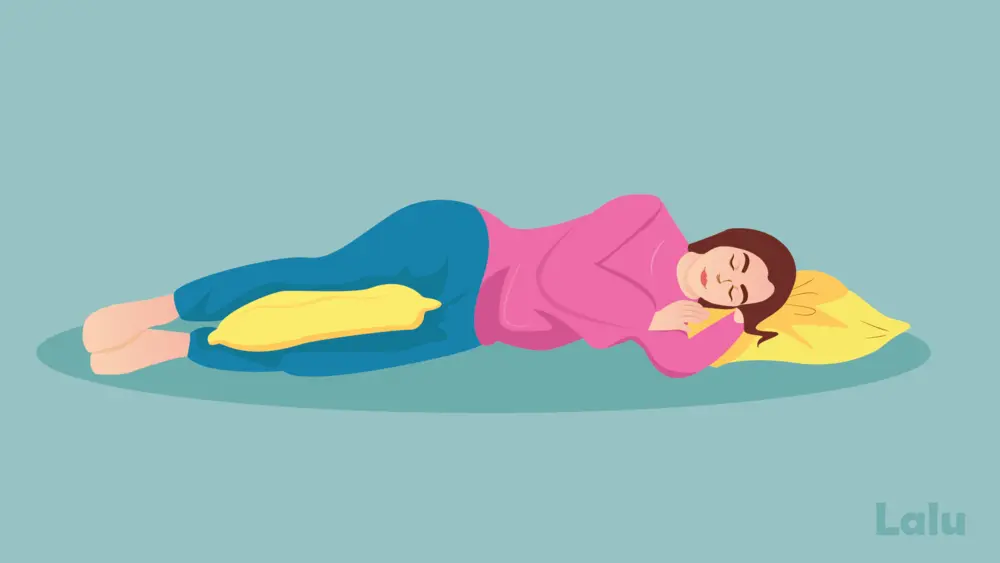
By week 26, the fundus of the uterus is located about 6 cm above the navel. As the fetus grows, sleep discomfort begins to arise. First, the physical discomfort of lying down will have you wondering how to sleep during pregnancy, and second, constantly thinking about your future baby can keep you awake. At times, this can even escalate to insomnia during pregnancy. Therefore, strictly practice good sleep hygiene.
To relieve and overcome such issues, you can use pregnancy pillows.
Congratulations!
You and your baby have come a long way, leaving the second trimester behind and stepping into the third trimester of pregnancy. "Lalu — Pregnancy School" can accompany you to make this journey smooth and successful.
Pregnancy calendar: Third trimester
Week 27
Your little one is about 36–37 cm long. The uterus is starting to get cramped for the baby, which makes their movements feel much stronger.
Their brain continues to develop and become more complex, and reflexes are fully formed. The baby sucks their thumb, sleeps, and wakes up with their eyes closed.
Pregnancy calendar: Week 28
Sleep problems may arise due to hormonal changes and constantly thinking about the baby. When you go to bed to sleep, you might not feel sleepy at all and instead feel the urge to do some chores.
Week 29
The baby's body begins to look like that of a newborn, and their head is no longer disproportionately large compared to the rest of the body. The fetus "plumps up" as the subcutaneous fat layer develops. By this time, the baby's own immune system is developing, though they continue to receive antibodies from the mother's bloodstream.
Pregnancy calendar: Week 30
Some women experience urinary incontinence when sneezing, coughing, or laughing. Swelling in the legs may also occur from time to time. These symptoms often go away after childbirth, and pelvic floor exercises help with urinary incontinence. If sudden, severe swelling appears in your face, hands or feet, see a doctor immediately.
Unusual sleep patterns may occur: in the third trimester, pregnant women often sleep restlessly and experience vivid dreams. This is caused by hormonal changes and thinking constantly about the unborn child.
Week 31
By this time, the fetus gains more body weight relative to its increase in length. Its body length is about 41 cm, and its weight is 1.5 kg. At 31 weeks, some babies have a full head of hair, while others may have no hair at all.
Week 32
While "waiting" to be born, your little baby practices movements vital for life: sucking, swallowing, breathing, turning their head, and moving their little legs and arms. When tired, they sleep and even dream.
Pregnancy calendar: Week 33
False labor contractions may cause even more discomfort. In this way, the body prepares for the delivery process. The difference between true labor and false labor is that false contractions subside within a short period.
Week 34
By this stage, you may notice that your belly has gotten slightly smaller. There are two reasons for this. First, the fetus drops a little lower. In some cases, this happens earlier, while in others, it occurs just a few hours before labor. Second, the amount of amniotic fluid in the uterus decreases slightly: it usually peaks at 32–34 weeks and then naturally starts to decline. However, if your bump seems noticeably smaller or fluid leaks from your vagina, see a doctor urgently: this may be a sign of low amniotic fluid (severe dehydration can be one of the causes), ruptured membranes or slowed fetal growth.
Week 35
By week 35 of the pregnancy calendar, your baby measures about 46 cm in length and weighs around 2.4 kg. Their body weight increases as the layer of subcutaneous fat thickens. Your little one's development is almost complete.
Pregnancy calendar: Week 36
At 36 weeks of pregnancy and in the following weeks, the fetus drops slightly lower. As a result, heartburn and shortness of breath subside, but urination increases due to pressure on the bladder, and discomfort appears in the pelvic area.
Week 37
The nature of the baby's movements changes (the uterus is getting cramped, so you will feel more rolling and stretching than kicks), but the number of movements should not decrease. If the movements decrease or change from what is usual, go to the maternity hospital immediately without waiting. The fetus can perform all reflexes vital for life after birth: inhaling and exhaling, swallowing, sucking, and opening and closing its eyes. It constantly repeats such movements.
For reference, delivery occurring before the start of the 37th week of pregnancy is considered premature birth.
Week 38
Your fetus can now be called a baby. All of their organs are fully developed, and they are completely ready for independent life. The baby drops into the pelvic area and may compress certain nerves.
Week 39
Term (on-time) birth occurs between 37 and 42 weeks. First-time mothers usually give birth at 41 weeks. At 39 weeks, false contractions may cause discomfort. If true contractions begin, as long as you are well-informed about the signs of labor, you will easily distinguish them from false labor: true contractions are painful, intensify over time, and last longer.
Pregnancy calendar: Week 40
Stay calm while awaiting labor. You should go to the maternity hospital immediately if you experience any of the following signs:
— Your waters break (amniotic fluid leaks). It is not always easy to tell amniotic fluid from normal vaginal discharge or urine, and many women may think they have leaked urine – if you are unsure, go to the maternity hospital anyway.
— True contractions begin. Unlike Braxton Hicks (false labor) contractions, true contractions are painful, continuous, and cause greater discomfort.
Week 41
The length of the fetus is 50–56 cm, and the body weight is 3.2–4.1 kg. These figures depend on genetics and other factors. These values are given as averages. By week 41, no significant changes occur in the fetal body. All organs are fully developed, and the baby is ready to be born.
Delivery is performed by an obstetrician-gynecologist through natural childbirth or cesarean section.
Pregnancy Calendar: Week 42
Labor can start at any time, and very soon you will be holding your baby in your arms, breastfeeding, rocking the cradle, and enjoying other delightful activities. If labor has not started after 41 full weeks, the risk to mother and baby increases. That is why, in line with international recommendations, your doctor will offer to induce labor at 41 completed weeks – be sure to see your doctor when you reach this point.
Congratulations on your baby!
Congratulations, you have been blessed with the happiness that every woman longs for! We are delighted to share these joyful moments with you!
If you liked the "Lalu – Pregnancy School" mobile app, please invite your other pregnant friends to our school as well.
Wishing you the very best in caring for and raising your baby, we encourage you to approach this important task with the same dedication and responsibility as you did during your pregnancy.
We believe our "Lalu" app will also be helpful in caring for your baby. If you want to ensure your child's proper growth, development, and care based on reliable information, continue using our app!