Pregnancy is a time of great joy, but it does not mean there are no concerns for the expectant mother to worry about. One of them is her constantly growing baby and expanding belly. So, how does the abdomen change during pregnancy?
A woman may worry that her belly is too large or too small for her week of pregnancy, or that the fetus is "positioned" in the upper or lower part of the abdomen.
Fetal development varies for everyone
If you are worried about the size or shape of your pregnant belly, know that you are not alone. This looks different in all women, and your baby is developing well, so do not worry.
Small belly during pregnancy
You are eating well, exercising, and undergoing regular prenatal check-ups. Nevertheless, people often tell you that your bump looks small for your due date, or ask if you are actually eating enough.
Just like babies, pregnant women's bellies come in various shapes and sizes. Through regular check-ups, your doctor or midwife will tell you the size of your unborn baby based on your due date and the size of your fetus. Your belly will be measured once during each visit, and these regular measurements begin between 15 and 20 weeks of pregnancy.
If your abdominal muscles are really strong and firm, they will prevent your growing uterus from protruding as much as expected. The bellies of tall women also appear smaller than those of shorter women at the same stage of pregnancy.
The only problem associated with a small belly during pregnancy is a condition called oligohydramnios, in which there is very little amniotic fluid. This is a condition that your doctor should monitor during your regular prenatal check-ups.
Interesting: What is maternal instinct?
Abdominal enlargement or a large belly during pregnancy
Due to the position of the fetus in your belly or your body structure, it may seem as if you are carrying a relatively large baby. A short woman's pregnant belly may appear very large.
If this is not your first pregnancy, you may have noticed your belly enlarging earlier than during your first pregnancy. This is because after the first pregnancy, your muscles are slightly stretched and yield more easily to the pressure of the expanding uterus.
Your doctor or midwife will measure and monitor the size of your abdomen during every prenatal check-up.
In rare cases, a large abdomen is caused by an excess of amniotic fluid (polyhydramnios), and the doctor must correctly assess this condition and take action in a timely manner.
The fetus being in the upper part of the abdomen
It is not unusual for the baby to be positioned forward and high in the uterus, especially during the first two trimesters of pregnancy. Some women go through their entire pregnancy this way, especially those with very strong abdominal muscles. Some women are interested in finding out the sex of the baby from elders based on the position of the fetus, and they do all sorts of research. However, ideas such as determining the sex based on the location of the fetus have no scientific basis.
Low fetal position
Carrying the baby in the lower part of the uterus can be uncomfortable. In a second or third pregnancy, the muscles and ligaments supporting the growing uterus are stretched and weakened, and they cannot hold the growing uterus as well as before.
Towards the end of pregnancy, you may notice almost overnight that you are carrying the weight lower than before. This is likely because your baby is dropping in preparation for birth (not all babies do this; some do not drop until labor begins).
If you notice this happening overnight before 37 weeks on the pregnancy calendar, talk to your doctor, as it may indicate that your body is preparing for labor.
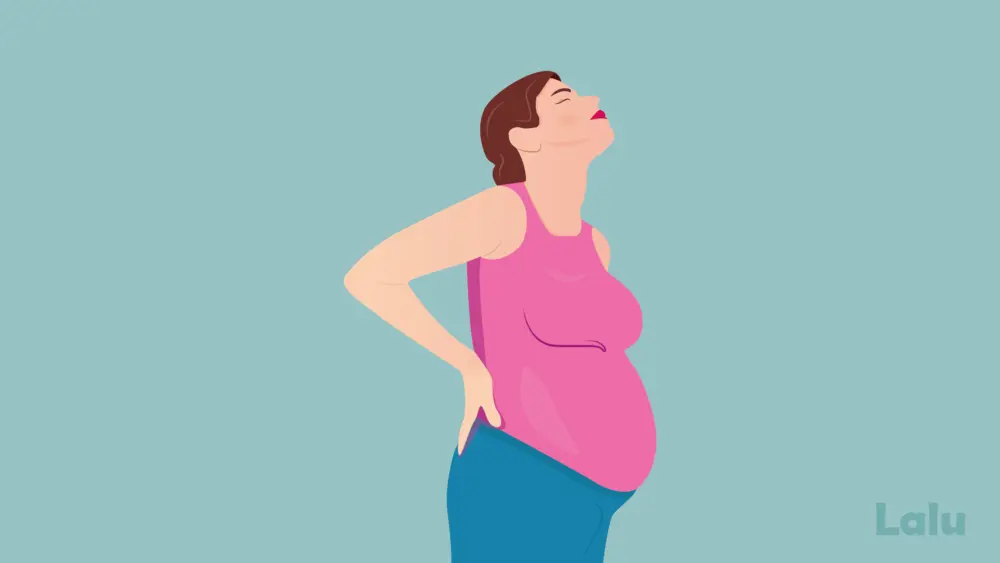
The biggest problem with carrying the baby low is that it puts pressure on your lower back. Exercises such as pelvic tilts can help relieve discomfort in the lower abdomen or back pain.
Important: Back pain during pregnancy — causes and ways to eliminate it
Belly during pregnancy: Carrying wide
A wide belly may indicate that your baby is lying transversely, meaning their head is positioned to the side rather than up or down.
If the baby does not turn head down by the time of birth, you may need a cesarean section.
Follow the instructions of your doctor or midwife for proper nutrition during pregnancy, as your and your baby's health depends on a healthy diet and well-organized daily habits.