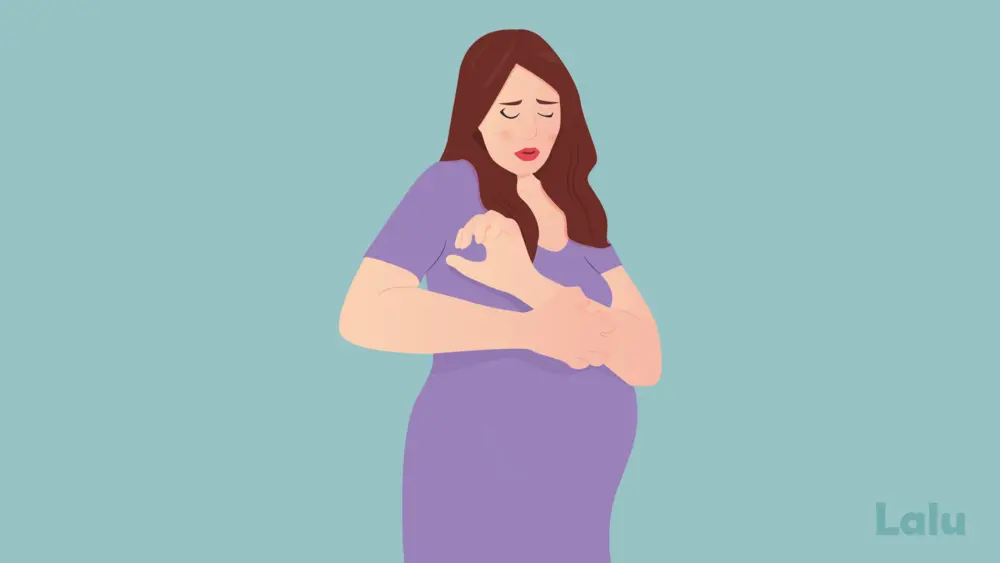
Intrahepatic cholestasis of pregnancy, commonly referred to as gestational cholestasis, is a liver disease that occurs in the later stages of pregnancy. The condition causes severe itching, but no rashes are observed on the woman's body. Itching usually occurs on the hands and feet, but it can also affect other parts of the body.
While the disease causes discomfort to the pregnant woman with an unpleasant condition like itching, it also poses a serious threat to the health of the developing fetus.
Symptoms
Severe itching on the body is the main symptom of gestational cholestasis. No rashes are observed. Most women experience itching on the palms of their hands or the soles of their feet, but some women may experience itching all over their body. Itching during pregnancy often worsens at night, and as a result, many pregnant women have insomnia.
Itching is more common in the third trimester of pregnancy, but sometimes this condition can start earlier. It becomes even more intense as your due date approaches. However, after your baby is born, the itching usually goes away within a few days.
Other less common signs of gestational cholestasis may include:
- Yellowing of the skin and the whites of the eyes (jaundice)
- Nausea;
- Decrease in or loss of appetite.
- Dark urine;
- Light-colored stool;
- Fatigue (extreme fatigue);
- Pain in the upper right abdomen.
When to see a doctor?
If you experience persistent or severe itching on your body, especially on your arms and legs, see a doctor immediately.
Causes of gestational cholestasis
The exact cause of gestational cholestasis is unclear. A pregnant woman's genetics play an important role in this condition. Sometimes it appears in a family's history as a familial disease. Certain genetic variants have also been identified.
Pregnancy hormones may also be involved. Pregnancy hormone levels rise as the due date approaches. According to doctors, this can slow down the normal flow of bile, which is produced in the liver and helps break down fats in the digestive system. Instead of exiting the liver, bile accumulates in the organ. As a result, bile enters the bloodstream, which causes itching.
Risk factors
Factors that may increase the risk of developing cholestasis in women during pregnancy include:
- Having a close relative with a history of gestational cholestasis;
- If cholestasis occurred in a previous pregnancy, the risk of its recurrence in a subsequent pregnancy is 60-70%*;
- Carrying more than one baby;
- Having a history of liver damage prior to pregnancy;
- Getting pregnant through IVF (in vitro fertilization).
Treatment and prevention
Treatment is usually aimed at relieving symptoms, mainly itching, and preventing possible complications.
During pregnancy, it is important to follow a healthy, balanced diet with fresh fruits and vegetables to reduce the risk of cholestasis and other problems.
Proper nutrition helps women with gestational cholestasis reduce serious complications of the disease. Foods that support liver function can be especially beneficial. Since this condition interferes with nutrient absorption, it is also important to consume as many nutrient-rich foods as possible.
It is important to follow the doctor's instructions regarding treatment and diet. A diet is not an alternative to prescribed medication.
Useful: Healthy vegetables for pregnant women
Complications of cholestasis of pregnancy
Complications associated with cholestasis of pregnancy may occur in the mother and/or the developing baby.
In expectant mothers, this condition may temporarily affect the body's ability to absorb fat. Decreased fat absorption leads to a drop in the level of vitamin K, which is involved in blood clotting. However, this complication occurs rarely.
People with cholestasis have low levels of vitamin K, which increases the likelihood of bleeding, so vitamin K supplements are often needed before and after childbirth.
In babies, the complications of cholestasis of pregnancy can be serious. They include:
- Premature birth;
- Breathing problems due to inhaling meconium;
- Death of the baby late in pregnancy, before delivery (stillbirth).
Since such complications are considered very dangerous for your baby's health, a doctor may induce labor early.
Therefore, if a pregnant woman experiences severe itching or other abnormal changes, it is important to consult a doctor immediately.