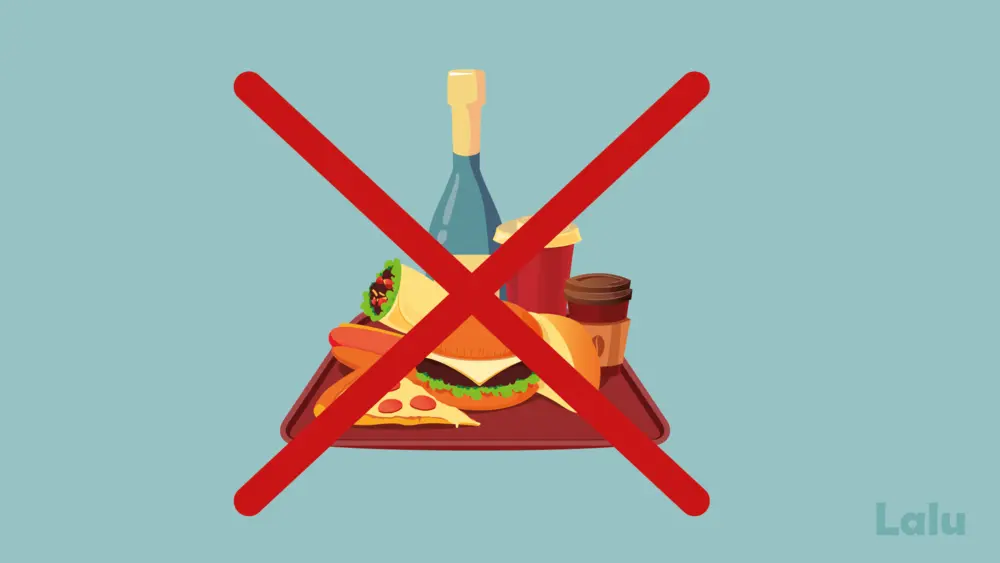
One of the first questions that arise when women become pregnant is: "What is not allowed during pregnancy? Which foods harm the fetus?" They need to find the answers to these questions and learn the list of foods they can and cannot eat.
Fortunately, there are more foods you can eat than those you are forbidden to consume. During pregnancy, you must pay close attention to your diet to maintain your health and that of the developing fetus. The "Lalu" mobile app, with its weekly recommendations, can help you with this challenging task.
Some foods should be consumed sparingly, while others must be avoided entirely. Below, we provide information on 11 foods and beverages that should be avoided or limited during pregnancy.
Undercooked, raw, and processed meat
Some of the problems associated with raw fish also apply to undercooked meat. Eating uncooked or raw meat increases the risk of contracting several bacteria or parasites, such as Toxoplasma, E. coli, Listeria, and Salmonella.
These bacteria can pose a serious threat to your baby's health: they can lead to severe neurological disorders, including intellectual disability, blindness, and epilepsy.
While many bacteria are found on the surface of cuts of meat, other bacteria can live inside the muscle fibers.
Small pieces of lamb and veal, or whole cuts of meat such as ribs, may be safe to eat undercooked. However, this only applies if the outside of the meat is fully cooked.
Meat pies, burgers, minced meat, and poultry should never be eaten raw or undercooked. Therefore, cook burgers on the grill until they are well done.
Hot dogs, sausages, and frozen semi-finished meats can also become contaminated with various bacteria during processing or storage.
Raw eggs
Raw eggs can be harmful due to Salmonella bacteria.
Symptoms of Salmonella infection include fever, nausea, vomiting, stomach cramps, and diarrhea. In rare cases, the infection can cause uterine cramps, leading to premature birth or stillbirth.
To be safe, always cook eggs thoroughly or use pasteurized eggs. Completely avoid consuming products such as eggs with undercooked yolks and homemade mayonnaise.
Animal organs
Animal organ meat is an excellent source of various nutrients.
These include iron, vitamin B12, vitamin A, zinc, selenium, and copper — all of which are beneficial for you and the baby.
However, it is not recommended to consume too much animal-based vitamin A during pregnancy.
Excessive intake of vitamin A through the consumption of animal organs, especially in the first trimester of pregnancy, can lead to birth defects and miscarriage.
High-mercury fish
Mercury is a highly toxic element. There is no known safe level of exposure, and it is most commonly found in contaminated water.
Mercury can be toxic to the nervous system, immune system, and kidneys. Furthermore, it can cause serious developmental problems in children, and even a small amount can have a negative impact.
Since it is common in polluted seas, large marine fish accumulate large amounts of mercury in their bodies. Therefore, it is essential to avoid fish with high levels of mercury during pregnancy and breastfeeding.
The types of fish with high mercury levels in their bodies that you should completely eliminate from your diet include:
- shark;
- swordfish;
- king mackerel;
- tuna (especially large tuna);
- marlin;
- tilefish from the Gulf of Mexico.
Importantly, there are no such fish species in our country. However, these types of fish are offered in various restaurants.
It should be noted that not all fish are harmful.
According to the FDA, it is beneficial to eat low-mercury fish during pregnancy, and these fish can be consumed up to three times a week.
There are many low-mercury fish, and here are some of them:
- cod;
- flounder;
- salmon (red fish);
- tilapia;
- trout.
Fatty fish, such as salmon, are an especially good option to eat, as they are rich in omega-3 fatty acids, which are important for your baby.
Undercooked or raw fish
This will be difficult for sushi fans, but it is very important. Raw fish, especially shellfish, can cause several infections. These can include viral, bacterial, or parasitic infections such as norovirus, vibrio, salmonella, and listeria.
These infections can cause dehydration and weakness in the mother's body. Some infections can negatively affect the baby's development and even lead to fatal outcomes.
Pregnant women are particularly susceptible to listeria infections. In fact, according to the CDC, pregnant women are 10 times more likely to contract listeria than the rest of the population.
These bacteria can be found in soil, contaminated water, and plants. Raw fish can become contaminated during processing, including during smoking or drying.
Listeria bacteria can also be passed to the fetus through the placenta. This can lead to premature birth, miscarriage, stillbirth, and other serious problems.
It is certainly recommended to avoid eating sushi dishes, including raw fish and shellfish. If you are a fan of these products, do not worry; after your baby is born, you can consume them after consulting with your family doctor.
Caffeine
You could be one of the millions of people who love coffee, tea, soft drinks, or cocoa. When it comes to a love of caffeine, you are certainly not alone. However, it is advisable to reduce their consumption during pregnancy.
According to the American College of Obstetricians and Gynecologists, pregnant women are generally recommended to consume less than 200 milligrams (mg) of caffeine per day.
Caffeine is absorbed very quickly and passes easily into the placenta. Because babies and their placentas lack the main enzyme necessary for caffeine metabolism, high levels of the compound can build up.
High levels of caffeine consumption during pregnancy have been proven to limit fetal growth and increase the risk of low birth weight.
A low birth weight of less than 2.5 kg leads to an increased risk of infant mortality or the development of chronic diseases in adulthood.
Thus, to prevent excessive caffeine levels in your baby, you should minimize your daily consumption of coffee and carbonated drinks.
Raw sprouts
Even the salad you consider healthy may not be free of harmful components. Raw plants, including greens, spinach, radishes, and products such as mung bean or bean sprouts, may be contaminated with salmonella.
The moist environment required for the seeds to germinate is ideal for this type of bacteria, and it is almost impossible to eliminate them at this stage.
Therefore, it is recommended that you completely avoid such products. It is safe to consume these green products only after they have been thoroughly cooked in food or oil.
Unwashed produce
The surface of unwashed or unpeeled fruits and vegetables may be contaminated with several bacteria and parasites.
These include Toxoplasma, E. coli, Salmonella, and Listeria, which can be acquired from the soil or during handling.
Bacterial contamination can occur at any time: during production, harvesting, processing, storage, transportation, or retail. One of the dangerous parasites that can remain on fruits and vegetables is called Toxoplasma.
Most people infected with Toxoplasma experience no symptoms, but some may feel like they have the flu for a month or more.
Most infants infected with Toxoplasma show no symptoms at birth. However, symptoms such as blindness or intellectual disability may develop later in the infant's life.
During pregnancy, it is very important to reduce the risk of infection by thoroughly washing fruits and vegetables with water, peeling, or steaming them. This should become a habit even after the baby is born.
Unpasteurized milk, cheese, and fruit juice
Raw milk, unpasteurized cheese, and soft cheeses contain harmful bacteria such as Listeria, Salmonella, E. coli, and Campylobacter.
The same applies to unpasteurized juice, which is also highly susceptible to bacterial contamination. All of these infections can have life-threatening consequences for the unborn baby.
Bacteria can occur naturally or result from contamination during harvesting and storage. Pasteurization is considered the most effective method for destroying harmful bacteria without altering the nutritional value of the products.
To minimize the risk of infection, consume only pasteurized milk, cheese, and fruit juice.
Alcohol
It is crucial to completely abstain from alcohol during pregnancy, as it increases the risk of miscarriage and stillbirth. Even a small amount can negatively affect your baby's brain development.
Alcohol consumption during pregnancy can cause fetal alcohol syndrome, leading to facial deformities, heart defects, and the development of intellectual disabilities.
Unhealthy processed foods
To support both you and your growing baby, it is important to eat foods rich in vitamins and minerals.
By the way, the saying that a pregnant woman "must eat for two" is just a myth. You can eat normally in the first trimester, then appropriately increase your intake by 350 calories per day in the second trimester and by approximately 450 calories per day in the third trimester.
An optimal pregnancy nutrition plan should mainly consist of whole foods to meet the needs of both you and your baby. Processed foods typically do not contain adequate amounts of vitamins and minerals. Furthermore, they are sometimes high in fats and sugars, which can negatively affect you and contribute to excess weight gain.
Excess weight gain during pregnancy leads to numerous complications and diseases. These include an increased risk of gestational diabetes, as well as certain complications during pregnancy or childbirth.
Include more protein-rich foods and light snacks in your diet. These include vegetables, fruits, and legumes (mung beans, peas, and beans). Of course, they must be thoroughly washed before consumption.
In conclusion, it is important to monitor your health during pregnancy. Therefore, it is crucial to avoid foods and drinks that pose a risk to you and your baby.
While most foods and beverages are perfectly safe to consume, some should be avoided, such as raw fish, unpasteurized dairy products, alcohol, and fish with high mercury content.
Furthermore, certain foods and beverages with high amounts of coffee and sugar must be limited to maintain a healthy pregnancy.
We hope that through this article you have found the answer to your question, "What is not allowed during pregnancy?"