It is very common for newborn babies to be fussy and cry in their sleep.
Because infants' bodies are not yet adapted to a regular sleep cycle, waking up frequently or whimpering in their sleep is completely normal.
Crying is the primary means of communication for newborns. Therefore, it is natural for babies to cry often, even in their sleep. As long as the baby shows no signs of illness or pain in such cases, this is completely normal.
Babies try to express themselves in various ways. For instance, crying in their sleep may be a sign of hunger or discomfort (a wet diaper, or being too hot or too cold). A sleeping child may also be startled and cry when they move or because of other noises.
Children often cry because of night terrors during light sleep or when they are overstimulated.
Helpful: Child development milestones: Hearing and making sounds
Does my baby have nightmares?
Some parents worry that their baby crying at night means they are having nightmares. Unfortunately, there is still no definitive answer to this question.
It has not been fully proven at what exact age nightmares or night terrors may begin.
Night terrors are relatively rare and are typically seen in children aged 4 to 12 years; however, children from 18 months of age may also cry out in fright at night. Night terrors are more likely to occur if the child is ill or sleep-deprived.
Night terrors occur during the deep sleep stage. If this stage is disrupted for any reason, your baby may cry or even scream.
Your baby is unaware that they are having such an episode in their sleep and will not remember it after waking up.
Ways to soothe a baby
If a baby wakes up during sleep and cries briefly, they will usually settle on their own. In this case, picking them up may wake the child and disrupt their sleep.
If the crying continues, you should gently rub the baby's back or belly and comfort them in a soft voice. This will help transition the baby into another stage of sleep and stop the crying.
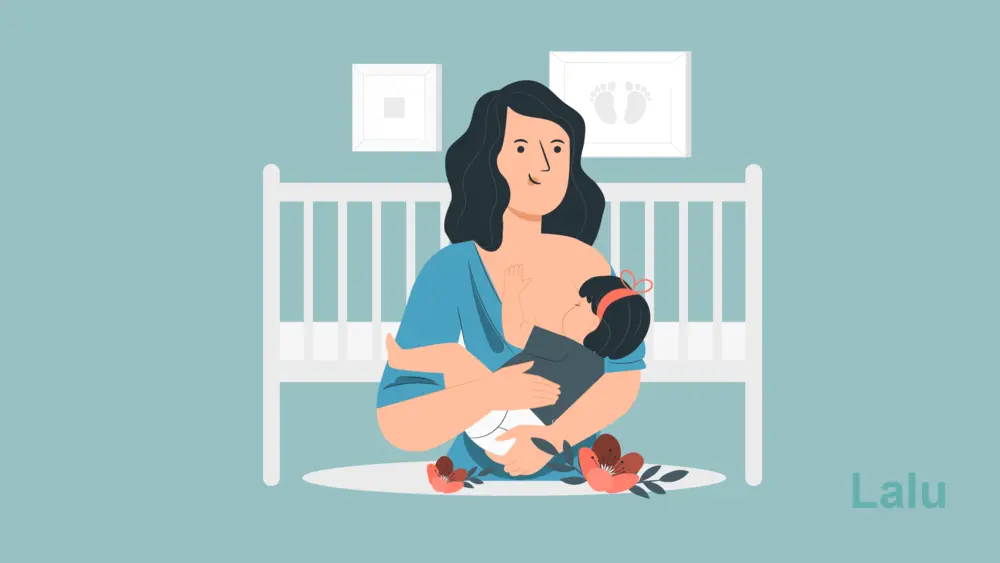
Breastfed babies may sleep even more soundly after nursing. Therefore, mothers (or caregivers) should understand clearly whether feeding the baby will wake them or not. In such cases, monitoring the baby's sleep routine can also be helpful. Some babies cry softly as they drift into deep sleep or right before waking up. Identifying the baby's usual sleep patterns helps mothers determine the cause of their child's crying.
Some babies may cry during sleep when they are sick or teething. In these cases, children cry because of the pain, and their sleep is disrupted. Mothers (or caregivers) should consult a pediatrician on how to relieve the baby's pain.
Although we do not know exactly when nightmares begin, mothers (or caregivers) who sense that their baby is crying because of a bad dream can calm them by singing a gentle lullaby or rubbing the baby's back. Babies who are still breastfed can also be comforted by nursing.
If a baby wakes up after having a nightmare, they should be comforted immediately and sung a lullaby to help them fall asleep, because babies need to be reassured that the nightmare is not real.
When should you consult a doctor?
In the following cases, mothers (caregivers) should consult a doctor regarding a child's nighttime crying and other sleep problems:
- if the child cries due to pain;
- if the sleep schedule changes suddenly;
- if the child's sleep is disturbed for several nights and soothing does not help; if the baby cries without stopping for a long time and nothing calms them, the cry is different from usual (high-pitched or very weak), they have a raised temperature (especially 38°C or higher in a baby under 3 months), they stop feeding, have difficulty breathing, become floppy or lethargic, or are hard to wake — do not wait: see a doctor straight away or call an ambulance;
- if feeding problems, such as not nursing sufficiently, prevent the child from sleeping, you should consult a doctor.
This article was prepared using information from the kidshealth.org and medicalnewstoday.com websites by the Lalu team.