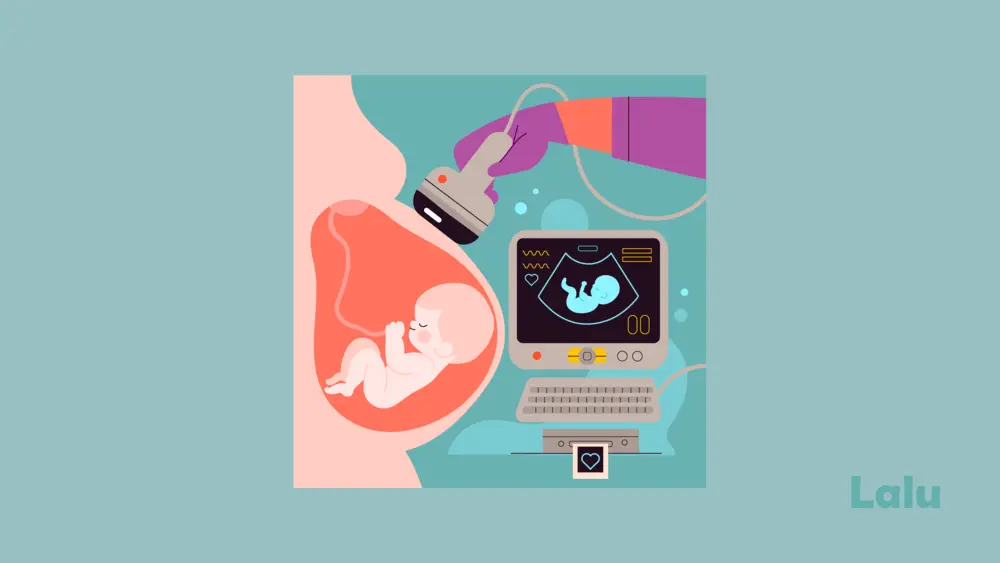
How can you tell if your unborn baby's heart rate is normal during pregnancy? This question often arises for women when they first hear the fetal heartbeat. It is also natural for this sound to surprise you. This is because women are usually unaware of how fast their baby's heart beats during pregnancy.
How your child's heart rate changes
Many women use onomatopoeic words like "duk-duk" to describe the fetal heartbeat when they hear it for the first time. During pregnancy, the heart rate is higher than that of an adult, but the fetus's normal heart rate varies depending on the stage of pregnancy and the time of day.
Fetal heart rate at different stages of pregnancy
The baby's heart begins to beat when the fetus is about five weeks old. At this time, the fetus's normal heart rate is the same as the mother's: 80 to 85 beats per minute. From this point on, during the first month, the heart rate increases by approximately three beats a day. Your doctor can use the heart rate to determine the age of the fetus using an ultrasound.
As long as the fetus's heart continues to beat, the risk of miscarriage decreases. However, if the heartbeat stops for a week or more, it can eventually lead to a miscarriage (spontaneous abortion).
By the ninth week, the baby's heart beats an average of 175 times per minute. From this point on, this rate begins to slow down and is approximately 120–180 beats per minute. During the last 10 weeks of pregnancy, the fetus's normal heart rate slows down again, but even then, it beats about twice as fast as an adult's heart. You can check your fetus's normal heart rate using the "Lalu" app.
Changes in fetal heart rate throughout the day
Your baby's heart rate, just like your own, fluctuates naturally throughout the day and night. During physical activity or sleep, the heart beats faster or slower than normal. It is recommended to keep your doctor informed about any significant changes in your baby's heartbeat.
Monitoring the baby's heart rate
Some parents consider monitoring their baby's heart rate every day, even at home. This process has both positive and negative aspects.
Important: What is a teratogen?
Monitoring a baby's heartbeat at home
Some parents feel reassured when monitoring their baby's heartbeat at home. However, it is better not to use devices such as Dopplers in a home setting. This is because prolonged or improper use of a Doppler listening device, or misinterpreting the results, can lead to various negative consequences.
Monitoring the baby's heart rate during labor
During childbirth, the fetal heartbeat can be checked by auscultation, meaning it can be detected using a stethoscope, fetoscope, or Doppler device at various stages of labor, and sometimes through external monitoring tools. In some cases, doctors may also recommend continuous external or internal monitoring.
Useful: Breast changes during pregnancy