An ectopic pregnancy occurs when an embryo implants outside the inner lining of the uterus. This can lead to life-threatening complications.
Most often, in an ectopic pregnancy, the embryo implants in the fallopian tubes, but it can also be located in the ovary or abdominal cavity.
An ectopic pregnancy can be devastating for the pregnant woman and can even lead to death.
For example, a ruptured fallopian tube leads to severe blood loss and shock. In such cases, prompt medical treatment is crucial. However, the embryo cannot be saved.
Symptoms of an ectopic pregnancy
In an ectopic pregnancy, initial symptoms may not appear.
These symptoms include:
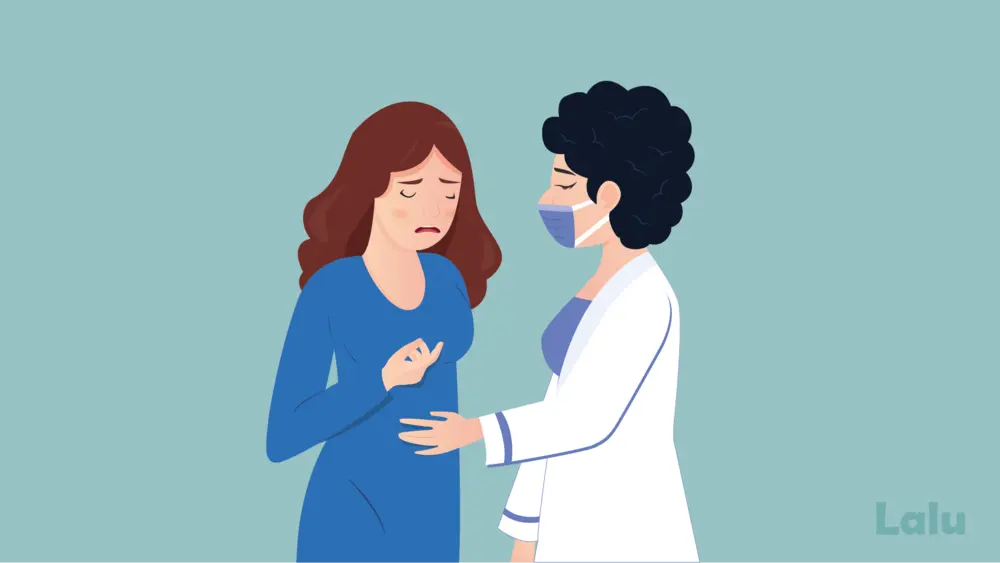
- Abdominal pain — this most often occurs in the lower part of the pelvis;
- Vaginal bleeding — the blood is a discharge that is more watery, lighter, or darker in color compared to menstrual blood. It may also be less viscous;
- Shoulder pain — this condition indicates internal bleeding. The bleeding irritates the diaphragmatic nerve, causing pain in the area;
- Fainting or collapse — this condition can occur after severe blood loss.
Complications of ectopic pregnancy
An ectopic pregnancy can be life-threatening to the pregnant woman if not diagnosed and treated promptly. Treatment cannot save the fetus.
Possible complications for the woman include:
- Internal bleeding: this can lead to shock and serious consequences. This risk increases when treatment is delayed.
- Damage to the fallopian tubes: this can lead to difficulties getting pregnant in the future. The person's other fallopian tube may still function adequately.
- Pregnancy is still possible after the removal of one fallopian tube. If both are removed, in vitro fertilization remains the only option for getting pregnant.
Risk factors
The following factors can cause an ectopic pregnancy in a woman:
- Previous ectopic pregnancy — women who have previously had an ectopic pregnancy have a higher risk of the condition recurring;
- Age — the older a woman is, the higher the risk of ectopic pregnancy;
- Infection — inflammation and infection in the fallopian tubes, uterus, and ovaries can increase the risk of ectopic pregnancy;
- Sexually transmitted infections — certain sexually transmitted infections, such as gonorrhea or chlamydia, increase the risk of pelvic inflammatory disease. Pelvic inflammatory disease, in turn, can increase the risk of ectopic pregnancy;
- Smoking — this can also increase the risk.
- Damaged or malformed fallopian tubes — structural changes or malformations in the fallopian tubes can make it difficult for eggs to move through them. This can increase the risk of the embryo implanting outside the uterus;
- Previous surgery — having had a cesarean section or myoma removal surgery in the past increases the risk of ectopic pregnancy.
Even in the absence of these risk factors, a person may still have an ectopic pregnancy. In fact, half of all people diagnosed with an ectopic pregnancy have no known risk factors.
Treatment
These options depend on the progression of the pregnancy and possible complications.
Surgery — Laparoscopic surgery is performed to remove the ectopic pregnancy. This method involves making a small incision in or near the navel and inserting a small camera and delicate instruments.
If an ectopic pregnancy leads to a rupture of the fallopian tube, the surgeon performs emergency surgery to correct the condition. If this is not possible, they remove the tube.
Medical treatment — If an ectopic pregnancy is diagnosed early, medication-based treatment may also be an option.
Symptoms of an ectopic pregnancy may begin between the 4th and 12th weeks. Diagnosing the problem may involve pregnancy tests, symptom assessment, and an ultrasound examination. It is important to inform doctors about any previous ectopic pregnancies. This will help doctors determine more quickly whether a pregnant woman has an ectopic pregnancy in the future.