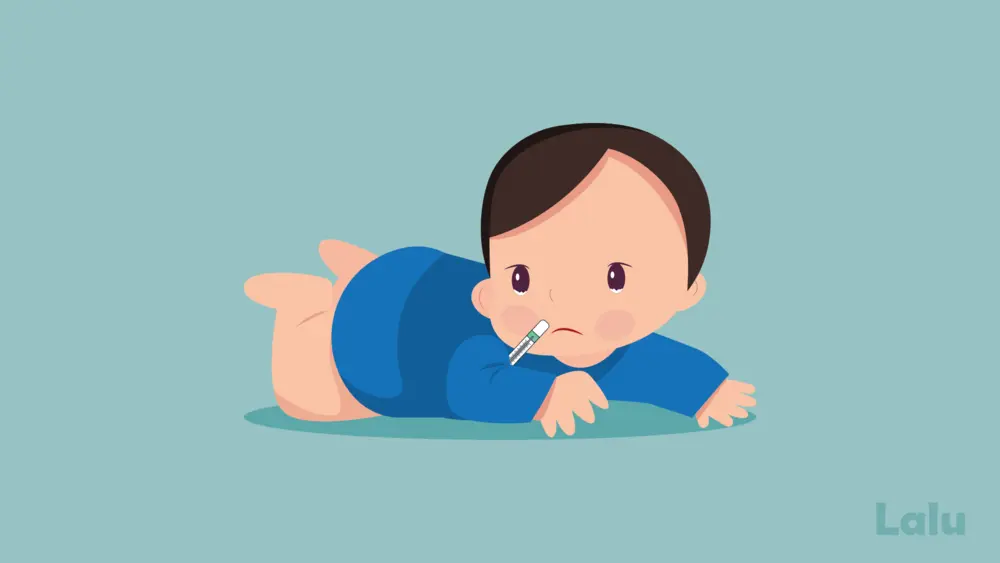
A newborn's body temperature regulation system is not well developed. If your baby is younger than 3 months and has a rectal or temporal artery temperature of 38°C or higher, take your baby to your local pediatrician immediately. This is an emergency. Take your baby to the hospital to have their general health assessed. Fevers in babies can occur for various reasons.
A baby's normal body temperature can range from 36.1°C to 37.9°C. Specialists consider a rectal temperature of 38°C or higher to be a fever.
A fever in a newborn can be a sign of a serious illness. Newborns are more susceptible to various infections, so any signs of infection in a child should be taken seriously, and professional medical help should be sought.
One of the common problems that presents with a fever in babies is respiratory infections. Newborns breathe through their noses more than older children do, so nasal congestion can make it difficult for them to breathe. The airways of newborns are also relatively small.
Lack of oxygen can cause serious harm to a newborn. If the baby is having difficulty breathing, even if they do not have a fever, consult a doctor about this.
Signs indicating breathing problems in a newborn include:
- wheezing;
- flaring of the nostrils while breathing;
- pale or bluish skin color, especially around the nail beds or around the mouth (these signs are harder to detect in infants)
- retraction of the intercostal muscles during inhalation.
If an infant develops breathing problems and a fever, parents should immediately take them to the hospital or call an ambulance.
Helpful tips
Always use a digital thermometer to check your child's temperature. Never use a mercury thermometer, because if it breaks, there is a risk of mercury poisoning. Also, strictly follow the guidelines for the proper use of a rectal thermometer for toddlers and infants.
According to the American Academy of Pediatrics, it is advisable to measure body temperature rectally in children under 3 years of age to achieve accurate results. This is done by inserting a thermometer into the child's rectum.
Improper use of a rectal thermometer can cause serious damage to the rectum. Always follow the product manufacturer's instructions for proper use.
If you feel uncomfortable taking a rectal temperature, use another method or learn how to take a rectal temperature from a specialist. When talking to your child's doctor, tell them which method you used to take your child's temperature.
Overheating
It is also important that the child does not get cold during a fever. However, a baby can overheat as a result of being wrapped in multiple layers of clothing and blankets. In this case, the baby's face may be hot and red, and the child may become restless and cry a lot. To avoid overheating:
- Keep your child away from any heat sources. For example, keep them away from room heaters, fireplaces, or direct sunlight.
- Keep your home at a temperature of approximately 22°C to 24°C;
- Dress your child in moderately thick clothing. Remember that they do not need to wear thicker clothes than you do.
Fever as a result of dehydration in babies
Newborns may not consume enough breast milk or formula. This can lead to an increase in body temperature. If you think your baby is not getting enough breast milk, consult a doctor. Useful skills for mothers: learn important knowledge such as breastfeeding rules and monitoring the child's food intake. "Lalu" can help you acquire such knowledge and skills through its reliable and useful resources.
Make sure you exactly understand how to check your child's temperature and buy a thermometer for your little one's first aid kit. If your baby has a fever, be sure to consult a doctor.
This article was prepared by the "Lalu" team based on information from Stanford Children's Health, the American Academy of Pediatrics, and WebMD.